
So… What Is a “Taco” in Morocco?
So… What Is a “Taco” in Morocco?
If you’re Mexican or American and you’ve spent any time in Morocco, you may have had a slightly confusing experience when ordering a “taco.”
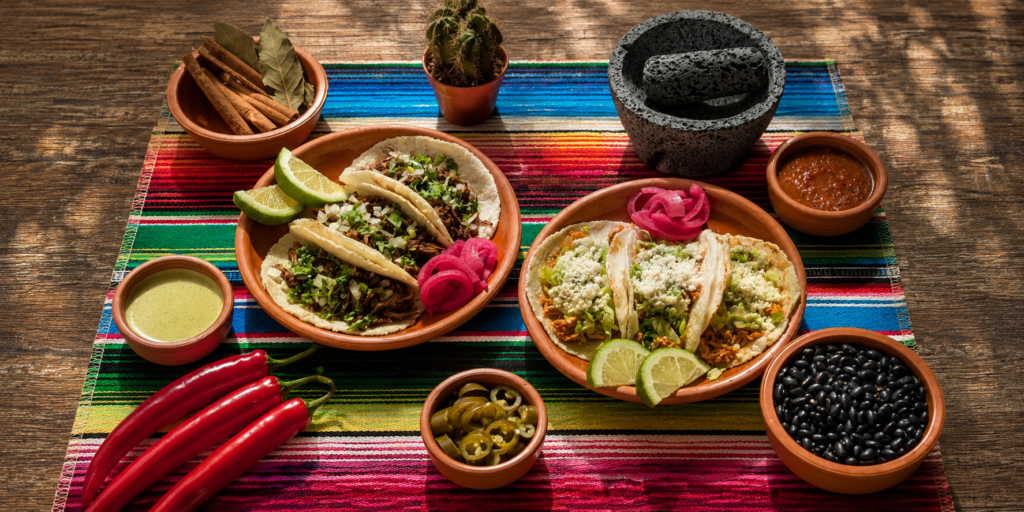
You’re probably imagining a warm corn tortilla, maybe some carne asada or chicken, onions, cilantro, salsa, and a squeeze of lime.
And then what arrives is… a large grilled wrap filled with meat, fries, cheese, and sauce.
Wait. What happened to the taco?
Don’t worry. You haven’t accidentally ordered the wrong thing. You’ve just met the French taco.
The taco that isn’t really a taco
Despite the name, the French taco is not a Mexican taco. It’s its own little creation, born in France around the late 1990s and early 2000s, particularly around Lyon and the surrounding suburbs.
The exact origin story is debated, but the French taco grew out of the multicultural fast-food scene in southeastern France. Think flour tortilla, grilled meat, fries, cheese sauce, and whatever other fillings you’re feeling that day all folded up and pressed on a grill.
And somehow, this combination became magic.
The French taco made its way across the Mediterranean and found a very happy home in Morocco. Today, you can find them all over the country, from small neighborhood snack shops to dedicated taco chains, particularly in larger cities like Casablanca, Marrakech, Rabat, and Tangier.
For many Moroccans, a French taco isn’t some strange imitation of Mexican food. It’s “taco 3adi” or the normal taco.
It’s a local favorite, especially when you’re hungry during the late night and need something warm, cheesy, filling, and satisfying. There is something undeniably comforting about a freshly pressed taco packed with crispy fries, meat, melted cheese, and sauce.
So if your Moroccan friend tells you they know a great place to get tacos at midnight, trust them.
They probably do.
But where are the Mexican tacos?
This is where things get especially interesting for us at Con Cariño.
For many Americans, especially Mexican-Americans like myself, the word taco carries a very specific meaning. It brings to mind the tacos we grew up eating. The kind rooted in Mexican cooking traditions, family recipes, street food, and regional Mexican culture.
So when I came to Morocco and realized that many people had never actually tasted a Mexican taco, I couldn’t stop thinking…
“Oh, you guys have no idea what you’re missing.”
Not because one taco is better than another. The French taco has become its own beloved food, with its own history and its own place in Moroccan food culture.
But Mexican tacos are a completely different experience.
The tortillas.
The salsas.
The slow-cooked meats.
The fresh toppings.
The regional traditions.
The little squeeze of lime.
There is so much to discover.
A little cultural exchange, one taco at a time
One of the things I love most about food is how it travels.
A word can travel from one country to another. A dish can cross a border, change along the way, and become something completely new.
That’s exactly what happened with the French taco.
And now, in a funny little way, we’re getting to bring the story back around.
At Con Cariño, it’s been our mission to introduce our Moroccan friends to the Mexican tacos we grew up knowing and loving. We’ve had people walk through our doors who have never had a handmade corn tortilla, never tasted birria, or never experienced the combination of flavors that makes a Mexican taco feel like home to us.
And watching someone take their first bite?
That’s one of our favorite parts.
Sometimes they recognize something immediately. Sometimes they’re surprised. Sometimes they tell us, “I’ve never had anything like this before.”
And that’s the beautiful part.
We’re not here to tell Morocco what a taco should be. We’re here to share a little piece of the food and culture we know, while getting to learn from the food and culture around us.
Because food has always been a conversation.
And here in Morocco, we’re pretty happy to keep the conversation going. One taco at a time.
Made with cariño, from Mexico to Marrakech.
